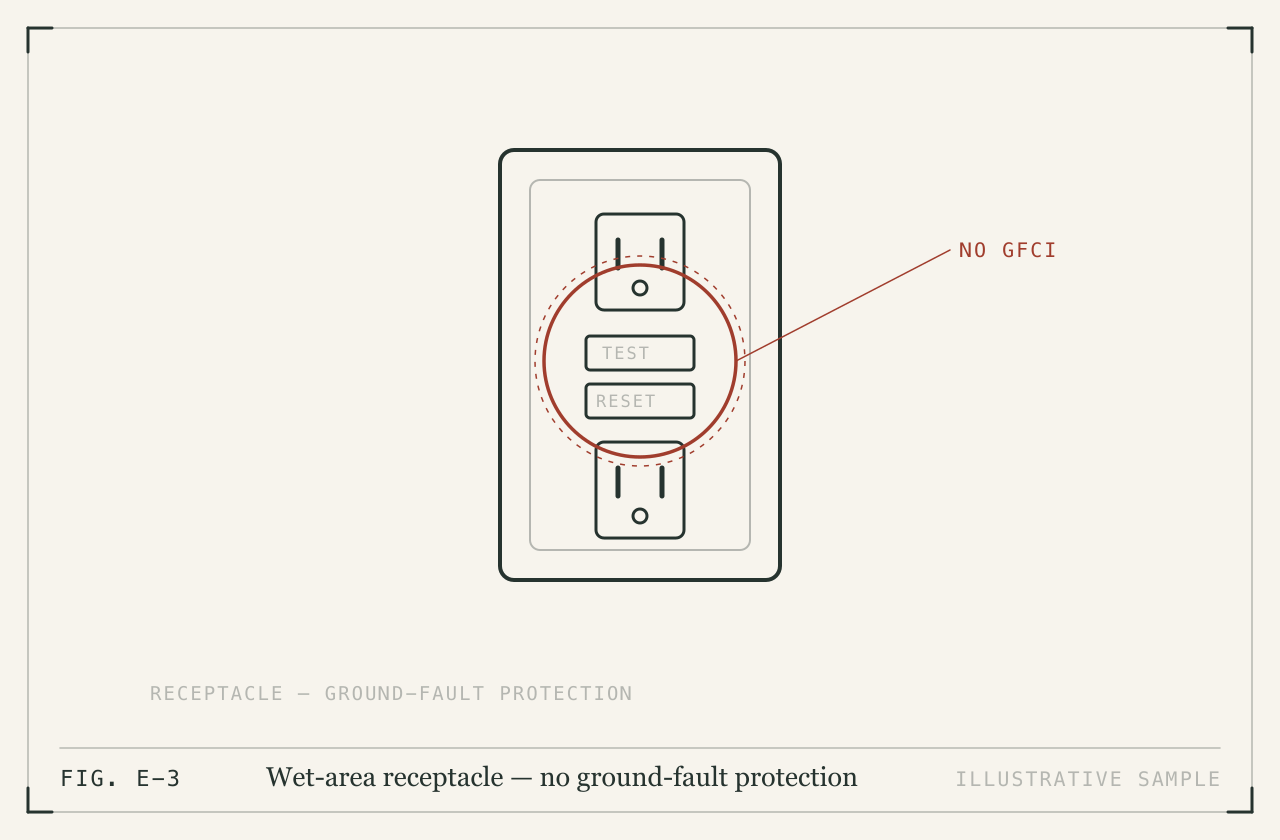
 Safety attentionNo GFCI protection at exterior and garage receptaclesExterior receptacles; garageHave a licensed electrician add GFCI protection at the exterior and garage receptacles. This is an inexpensive upgrade with a meaningful shock-safety benefit.
Sample report — a fictional property, produced by the real SightSpec pipeline.
Your property report
Final418 Stonebrook Lane
Springfield, MA, 01101
December 5, 2025 · Inspected by Sam Stone
Inspection record 1,973 ft² · 3 bd / 2 ba · Built 1984
- Inspected
- December 5, 2025
- Inspector
- Sam Stone
- Prepared for
- Jordan Rivera
- Property
- 1,973 ft² · 3 bd / 2 ba · Built 1984
- Coverage
- 8 of 8 systems inspected
At a glance
Start with the one safety item — it's in Electrical.
The rest is planning: three major defects, four routine items and five notes, each documented with the evidence below.
- 1Safety attention1 needs attention before closing
- 3Major defect3 to plan and budget for
- 4Repair & maintenance4 routine repair and upkeep items
- 5Informational5 notes for your records
- 8 of 8Systems inspected
- 6Photos
Planning ranges across 4 of 8 findings: $1,220 – $9,190 · rough ranges, not contractor quotes
Important findings
The three findings to read first — the full record follows below.
Safety attentionNo GFCI protection at exterior and garage receptaclesExterior receptacles; garageHave a licensed electrician add GFCI protection at the exterior and garage receptacles. This is an inexpensive upgrade with a meaningful shock-safety benefit.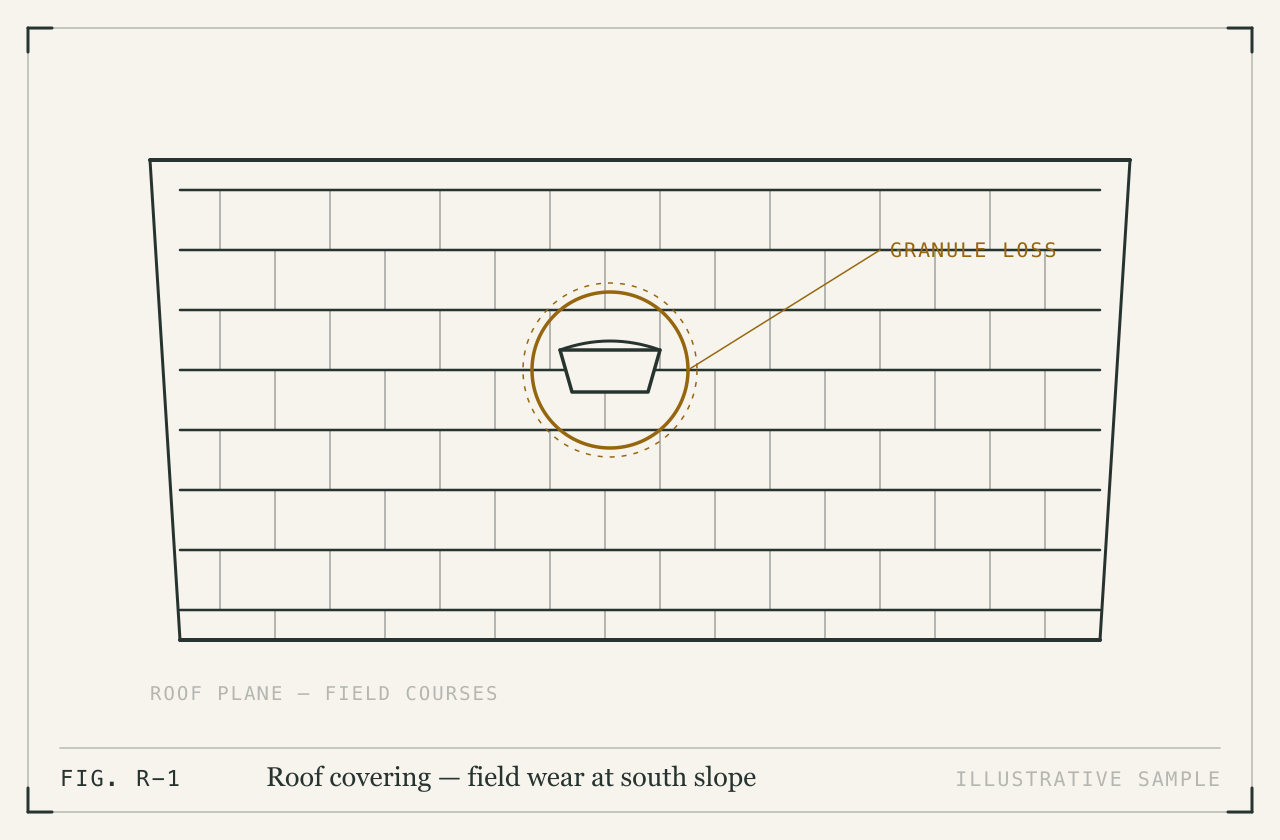 Major defectShingle granule loss concentrated on the south slopeSouth roof slopeHave a licensed roofing contractor evaluate the south slope and provide a repair-versus-replacement opinion with remaining-life context. Budget planning should assume covering replacement on this slope within the next few seasons.
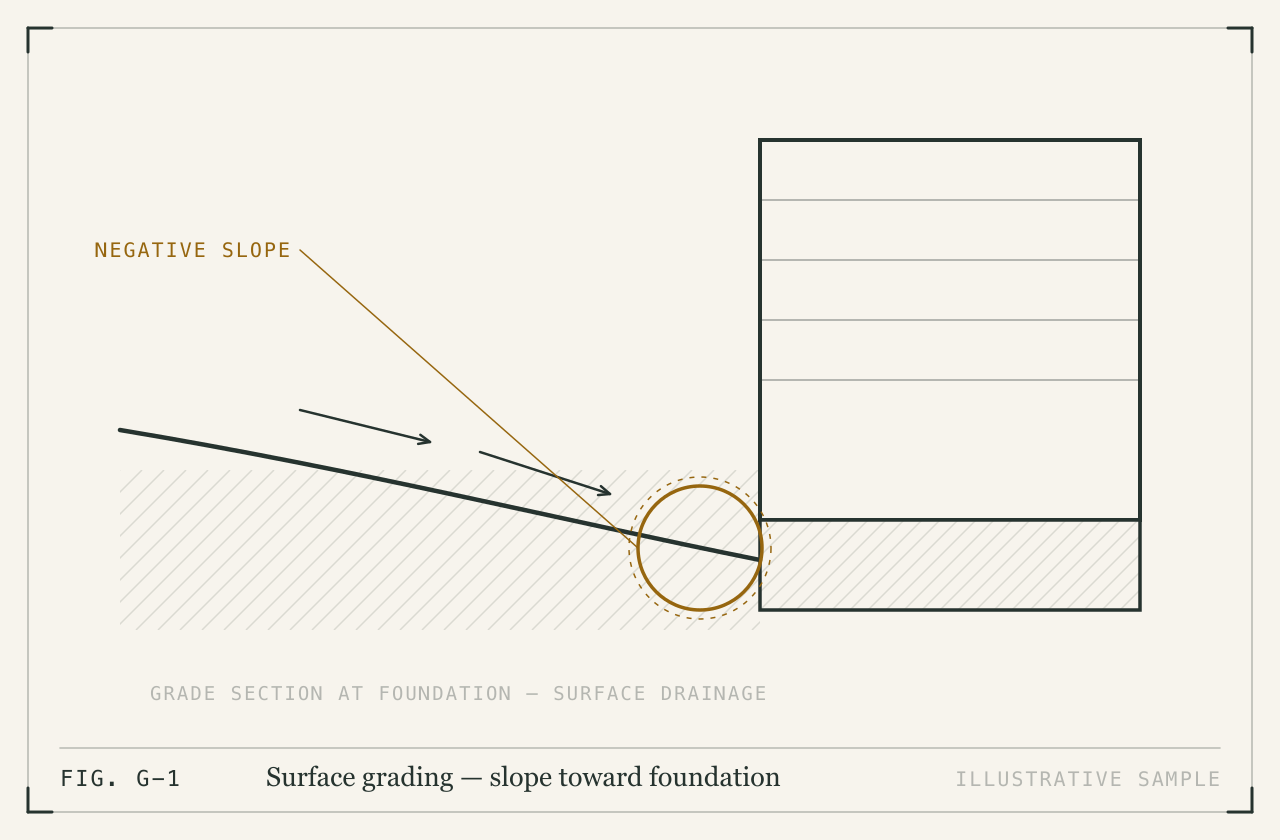 Major defectGrade slopes toward the foundation at the rear patioRear elevation, patio edgeRegrade the affected area to fall away from the foundation — a minimum of six inches over the first ten feet is the common guideline — and extend the nearest downspout so roof runoff discharges beyond the regraded slope.
Action summary
Every item that needs attention
All 8 actionable findings, grouped by consequence. Tap any item for its photos and full detail.
Health & Life Safety
1
Significant Repair Items
3
- Shingle granule loss concentrated on the south slopeHave a licensed roofing contractor evaluate the south slope and provide a repair-versus-replacement opinion with remaining-life context.South roof slope · Roof
- Grade slopes toward the foundation at the rear patioRegrade the affected area to fall away from the foundation — a minimum of six inches over the first ten feet is the common guideline — and extend the nearest downspout so roof runoff discharges beyond the regraded slope.Rear elevation, patio edge · Exterior & Grounds
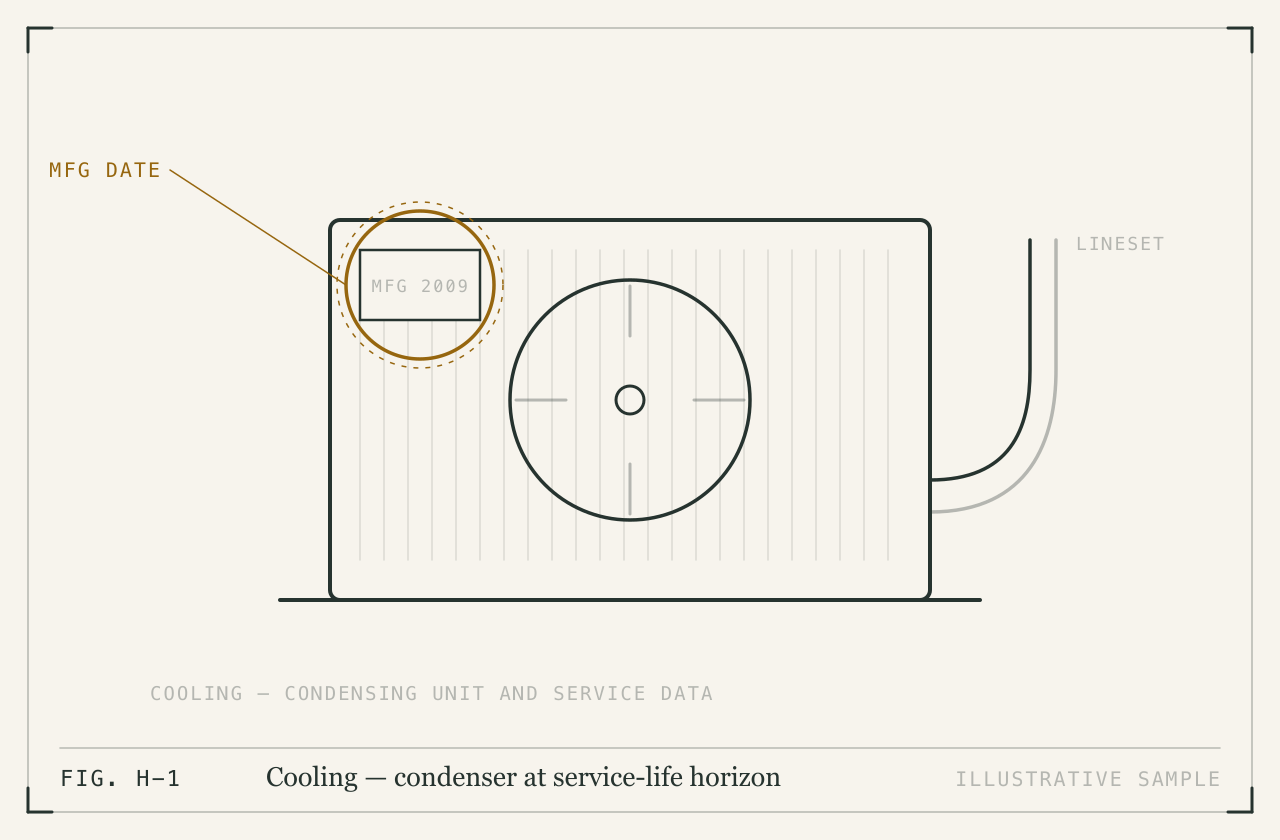 Air-conditioning condenser at its service-life horizonBudget for condenser replacement rather than major repair.Rear yard, condenser pad · Heating & Cooling
Recommended Repairs & Maintenance
4
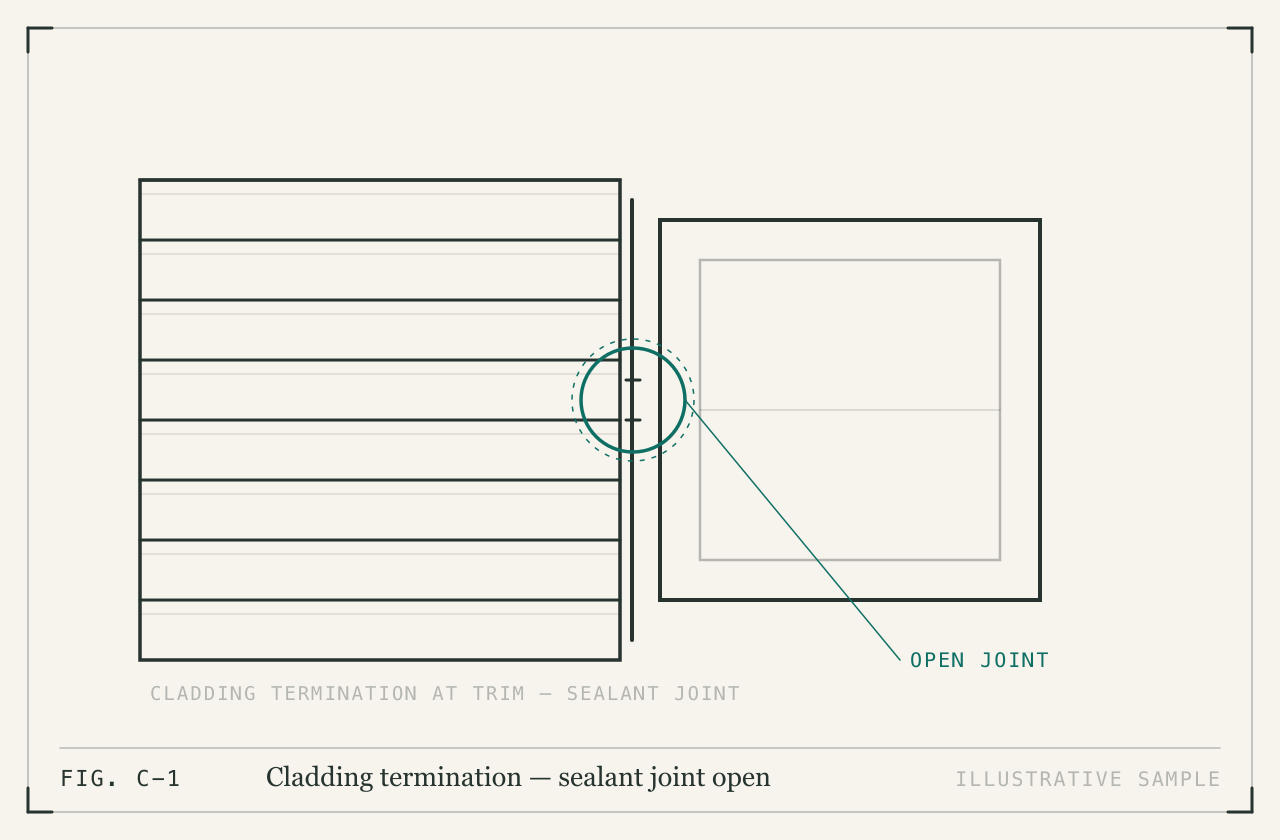 Sealant joints open at cladding-to-trim transitionsCut out failed sealant and re-seal the open joints as part of seasonal maintenance to keep bulk water out of the wall assembly.Window trim, south and west elevations · Exterior & Grounds
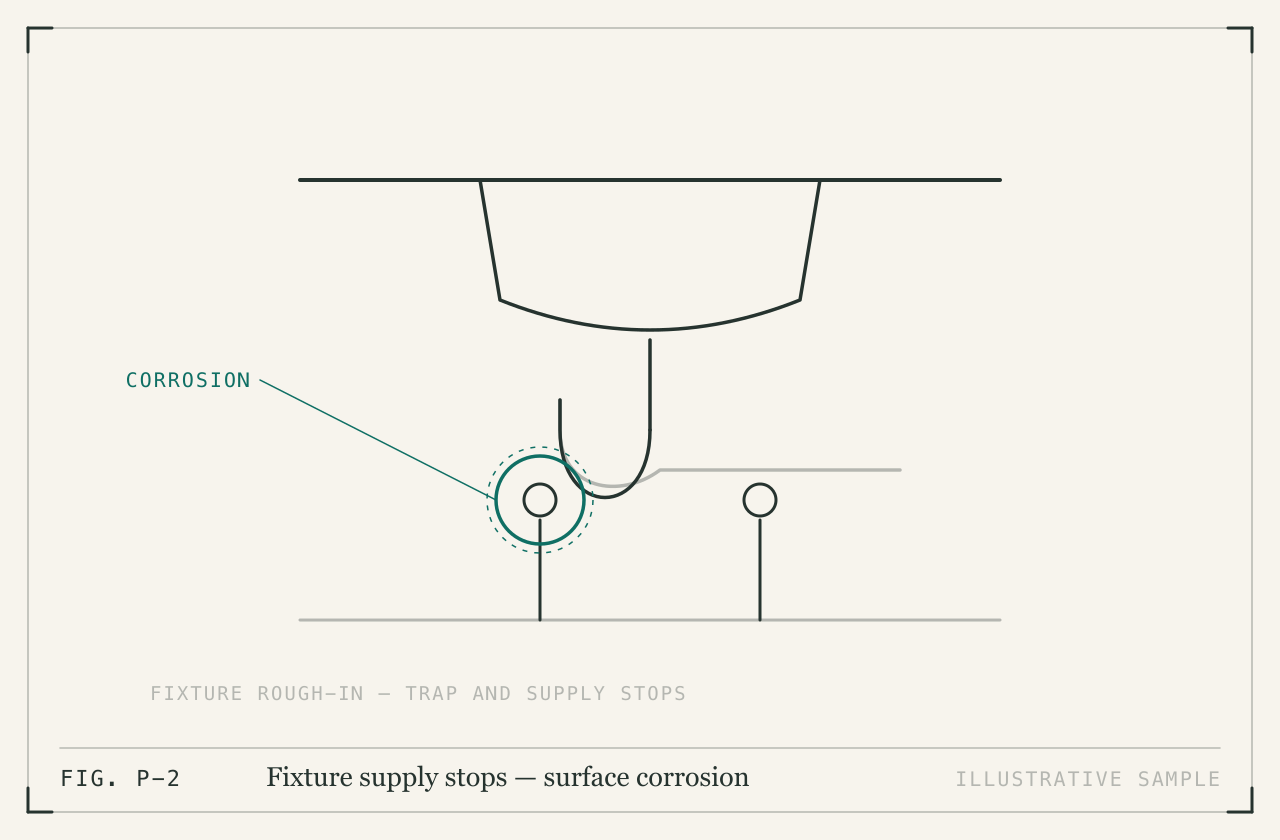 Surface corrosion at fixture supply stopsReplace the corroded angle stops during routine plumbing service so each fixture can be isolated reliably in an emergency.Kitchen sink; hall bathroom · Plumbing
- Garage overhead door reverses properly; opener force at limitAdjust the opener's down-force setting per the manufacturer's instructions so the door reverses readily on contact.Garage · Interior
- Insulation slightly below current guidance; eave baffles absentWhen insulation is topped up, install eave baffles first so soffit ventilation is preserved.Attic · Attic & Ventilation
A repair is complete when it can be verified — keep contractor receipts, and your inspector can re-check any item at a re-inspection.
Systems at a glance
- Roof1Major defect1Informational
- Exterior & Grounds1Major defect1Repair & maintenance
- Structure & Basement1Informational
- Electrical1Safety attention1Informational
- Plumbing1Repair & maintenance1Informational
- Heating & Cooling1Major defect1Informational
- Interior1Repair & maintenance
- Attic & Ventilation1Repair & maintenance
1 section not applicable to this property — see Scope & limitations.
Legend: ▲ Safety attention · ◆ Major defect · ● Repair & maintenance · ○ Informational
Inspection details
- Address
- 418 Stonebrook Lane
- Inspection date
- December 5, 2025
- Inspector
- Sam Stone
- Client
- Jordan Rivera
- Year built
- 1984
- Square footage
- 1,973 sq ft
Meet your inspector
Sam Stone
Summit Home Inspections
I'm Sam Stone, and Summit Home Inspections is my one-inspector company here in Springfield. I walk every home the same way — top to bottom, slowly, with a camera in hand — because the report you're reading is the product you paid for.
My job on inspection day is to notice things; my job afterward is to make sure you understand them. If anything in this report is unclear, call or email me. Explaining a finding is always part of the service, never an extra.
From your inspector
Thanks for trusting me with your inspection. This report is organized so the most serious items come first — start at the top and work down.
Every finding carries a photo, what I observed, and what I'd recommend. Nothing in here is meant to alarm you: every home has a list, and knowing yours is how you stay ahead of it.
If anything is unclear, call or email me — walking clients through their report is part of the job.
Sam Stone
Electrical
1Safety attention 1Informational
One safety item and one note were recorded in this system.
01.1
No GFCI protection at exterior and garage receptacles
Safety attentionExterior receptacles; garageBefore closingElectrician
In plain terms — GFCI protection shuts off power when it detects a ground fault, helping protect people from electric shock, including near water.
What we observed
The exterior receptacles and the garage receptacles are not protected by ground-fault circuit interrupters. These are wet and damp locations where GFCI protection is the current safety standard; the home predates the requirement.
Recommended
Have a licensed electrician add GFCI protection at the exterior and garage receptacles. This is an inexpensive upgrade with a meaningful shock-safety benefit.Planning range: $150 – $350 — National typical installed range, 2026; a local quote governs — per receptacle. Not a contractor quote.
01.2
Service panel orderly with capacity for current use
InformationalBasement, main panel
Reference image — not this property

In plain terms — Electrical wiring carries current; breakers interrupt circuits, and junction boxes enclose wiring connections.
What we observed
The 200-amp service panel is neatly wired, fully labeled, and has open positions for future circuits. No double-taps, scorching, or improper conductors were observed.
Recommended
No action needed — retained for the record.
Roof
1Major defect 1Informational
One major defect and one note were recorded in this system.
Home age 41 years · typically 20–30 years (asphalt shingle; other materials vary)
02.1
Shingle granule loss concentrated on the south slope
Major defectSouth roof slopeNear-termRoofer
In plain terms — Shingles form a roof's outer layer and help it shed water.
What we observed
The architectural shingles on the south-facing slope show accelerated granule loss and exposed asphalt in scattered patches, heaviest near the ridge. The north slope retains most of its granule surface. No active leakage was visible in the attic below at the time of inspection.
Recommended
Have a licensed roofing contractor evaluate the south slope and provide a repair-versus-replacement opinion with remaining-life context. Budget planning should assume covering replacement on this slope within the next few seasons.Planning range: $800 – $6,500 — Roof / flashing repair, including potential underlayment work. Not a contractor quote.
02.2
Gutters clear and draining at time of inspection
InformationalAll elevations
Reference image — not this property

In plain terms — Gutters collect roof runoff; downspouts carry that water to a discharge point.
What we observed
Gutters and downspouts were clear of debris and discharged properly through extensions at all four corners during the inspection.
Recommended
No action needed — retained for the record.
Exterior & Grounds
1Major defect 1Repair & maintenance
One major defect and one routine item were recorded in this system.
03.1
Grade slopes toward the foundation at the rear patio
Major defectRear elevation, patio edgeNear-termFoundation contractor
What we observed
Surface grading along roughly twelve feet of the rear elevation directs runoff toward the foundation rather than away from it. The interior foundation wall in this area showed no elevated moisture readings at the time of inspection, but the drainage pattern will work against the house every storm.
Recommended
Regrade the affected area to fall away from the foundation — a minimum of six inches over the first ten feet is the common guideline — and extend the nearest downspout so roof runoff discharges beyond the regraded slope.
03.2
Sealant joints open at cladding-to-trim transitions
Repair & maintenanceWindow trim, south and west elevationsNear-termGeneral contractor
In plain terms — Sealant is a material used to close joints or gaps; its purpose and suitability depend on the location and materials.
What we observed
Perimeter sealant at several window and trim transitions has weathered and pulled away, leaving open joints on the south and west elevations. No moisture staining was observed on interior finishes adjacent to these openings.
Recommended
Cut out failed sealant and re-seal the open joints as part of seasonal maintenance to keep bulk water out of the wall assembly.
Heating & Cooling
1Major defect 1Informational
One major defect and one note were recorded in this system.
Home age 41 years · typically 10–20 years (furnace 15–20, central A/C 10–15)
04.1
Air-conditioning condenser at its service-life horizon
Major defectRear yard, condenser padNear-termHVAC technician
What we observed
The outdoor condensing unit's data plate shows a 2009 manufacture date. The system cooled normally during testing, but at this age the unit is operating beyond the typical 12–15 year design life, and the refrigerant it uses has been phased out, which raises the cost of future repairs.
Recommended
Budget for condenser replacement rather than major repair. A qualified HVAC contractor can quote replacement now so an eventual failure becomes a scheduled project instead of an emergency.
04.2
Furnace serviced within the last year
InformationalUtility room
Reference image — not this property

What we observed
The gas furnace carries a service tag dated within the past twelve months and operated normally through a full heating cycle during the inspection.
Recommended
No action needed — continue annual service.
Plumbing
1Repair & maintenance 1Informational
One routine item and one note were recorded in this system.
Home age 41 years · typically 7–12 years
05.1
Surface corrosion at fixture supply stops
Repair & maintenanceKitchen sink; hall bathroomElectrician
In plain terms — Corrosion is deterioration of a material through chemical reactions with its environment; rust is one form affecting iron and steel.
What we observed
The angle stops under the kitchen sink and hall bathroom lavatory show surface corrosion at the compression fittings. No active leakage was present, but corroded stops are less likely to close fully when they are eventually needed.
Recommended
Replace the corroded angle stops during routine plumbing service so each fixture can be isolated reliably in an emergency.Planning range: $150 – $1,500 — Plumbing repair scope depending on access and rot. Not a contractor quote.
05.2
Water heater manufactured 2019 — mid-life
InformationalUtility room
Reference image — not this property
In plain terms — A water heater supplies heated water. Its temperature-and-pressure relief valve provides a release path for excessive temperature or pressure.
What we observed
The 50-gallon water heater's data plate shows a 2019 manufacture date, placing it mid-life against a typical 10–12 year service expectation. Installation details, including the TPR discharge, were proper.
Recommended
No action needed — plan replacement in the ordinary course toward the end of its service life.
Interior
1Repair & maintenance
One routine item was recorded in this system.
06.1
Garage overhead door reverses properly; opener force at limit
Repair & maintenanceGarageGarage door technician
Reference image — not this property

What we observed
The garage door's photo-eye safety reverse functioned correctly. The pressure-reverse test required more resistance than expected before the door reversed, suggesting the opener's force setting is at the high end of its adjustment.
Recommended
Adjust the opener's down-force setting per the manufacturer's instructions so the door reverses readily on contact.Planning range: $120 – $840 — Garage door spring, opener, or panel replacement. Not a contractor quote.
Attic & Ventilation
1Repair & maintenance
One routine item was recorded in this system.
07.1
Insulation slightly below current guidance; eave baffles absent
Repair & maintenanceAtticGeneral contractor
Reference image — not this property

In plain terms — The eave is the roof overhang; the soffit covers its underside and fascia finishes its outer edge.
What we observed
Attic insulation averages roughly eight inches of blown fiber — functional, but below current regional guidance — and the eave bays lack ventilation baffles, allowing insulation to restrict soffit airflow at several bays.
Recommended
When insulation is topped up, install eave baffles first so soffit ventilation is preserved. This is an efficiency improvement, not a defect repair.
Structure & Basement
1Informational
One note was recorded in this system.
08.1
Foundation and framing serviceable where visible
InformationalBasement
Reference image — not this property

What we observed
Visible foundation walls, the main beam, and floor framing probed sound where accessible. Minor shrinkage cracking typical of the home's age was noted and does not currently indicate movement.
Recommended
No action needed — retained for the record.
Your maintenance timeline
Findings mapped onto a simple calendar — what to handle now and what can wait.
Now
1No GFCI protection at exterior and garage receptacles
Next 30 days
3Shingle granule loss concentrated on the south slope
Grade slopes toward the foundation at the rear patio
Air-conditioning condenser at its service-life horizon
This year
4Sealant joints open at cladding-to-trim transitions
Surface corrosion at fixture supply stops
Garage overhead door reverses properly; opener force at limit
Insulation slightly below current guidance; eave baffles absent
Ongoing upkeep
5Gutters clear and draining at time of inspection
Foundation and framing serviceable where visible
Service panel orderly with capacity for current use
Water heater manufactured 2019 — mid-life
Furnace serviced within the last year
Scope & limitations
8 of 8 systems inspected
Every accessible system on this property was inspected. The full roster is below for your records.
- RoofInspected
- Exterior & GroundsInspected
- Structure & BasementInspected
- ElectricalInspected
- PlumbingInspected
- Heating & CoolingInspected
- InteriorInspected
- Attic & VentilationInspected
- Fireplace & ChimneyNot applicable
Legend: ▲ Safety attention · ◆ Major defect · ● Repair & maintenance · ○ Informational
System service life
Home age 41 years · built 1984
Roof covering
typically 20–30 years (asphalt shingle; other materials vary)
Marker = home age (41 yrs) · band = typical range · documented in the Roof chapter of this report
Heating & cooling equipment
typically 10–20 years (furnace 15–20, central A/C 10–15)
Marker = home age (41 yrs) · band = typical range · documented in the Heating & Cooling chapter of this report
Water heater (tank)
typically 7–12 years
Marker = home age (41 yrs) · band = typical range · noted by the inspector in this report
Planning information only — not a prediction, a warranty, or a component age. Typical ranges follow InterNACHI's Standard Estimated Life Expectancy Chart; actual life varies with climate, material, and maintenance, and components may have been replaced since the home was built.
Measurements
5 readings
Instrument readings recorded during the inspection. A reading documents a condition — anything of concern it supports appears as a finding above.
Temperature · 2 readings · 64.8–118.5 °F
Moisture · 3 readings · 8.1–14.2%
| Kind | Location | Reading |
|---|---|---|
| Moisture | Basement NE foundation wall | 9.4% |
| Moisture | Basement SE foundation wall | 8.1% |
| Moisture | Rear sill plate at grading concern | 14.2% |
| Temperature | Primary bedroom exterior wall | 64.8 °F |
| Temperature | Supply register, living room | 118.5 °F |
Inspection photographs
6 photographs on file
Representative views of the systems inspected without a finding. Every photograph of a finding sits beside that finding; the full record stays on file with this report.
Every photograph on file documents a finding above.
Repair request summary
A prioritized list to support your conversation with the seller. Tick the items you want to raise, then copy the list for your agent. Full photos and context for each item are in the report.
Safety Items to Address
1 itemMajor Repairs to Negotiate
3 itemsRecommended Maintenance
4 itemsPrepared from the SightSpec inspection report to support a conversation with the seller. Items are summarized from the report, which contains the full photographs and context. This is not legal advice and does not change the contents of the underlying report.
Appendix
Guidance and programs from your inspector — kept after the record so the findings stay first.
14Homeowner resourcesOpen ▸Close ▾
This report is a record of what was visible and accessible on the day of the inspection. It is organized by system — roof, structure, electrical, plumbing, heating and cooling, and the rest of the home — so you can read it front to back or jump straight to the part you care about.
Start with the summary. It names what matters most and links to the detail. Then read the chapters for the systems you plan to use, repair, or budget for. Photographs sit beside the findings they belong to, so you can see exactly what the inspector saw.
Every finding carries one of the following severities. They mean the same thing on every SightSpec report, and each is always written out by name, so the meaning survives any printout:
No report can describe a home perfectly, and no inspection is a warranty. Where a system could not be fully examined, the report says so plainly rather than staying silent. If a finding is unclear, ask your inspector — this report is theirs, and explaining it is part of the work you paid for.
Safety attention — A condition that could affect someone's safety — have it evaluated before closing.
Major defect — A significant repair or system concern — plan and budget for it.
Repair & maintenance — Routine repair or upkeep — normal for any home.
Informational — Worth knowing — no action implied.
About this report
Your maintenance calendar: Now · 1 — Next 30 days · 3 — This year · 4 — Ongoing upkeep · 5 · See the full timeline